
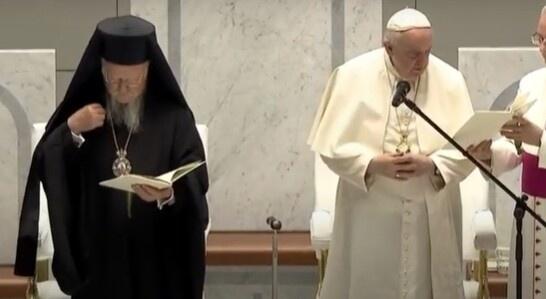
 Alle ore 17.45 di questo pomeriggio (15.45 ora di Roma), presso la Cattedrale di Nostra Signora d’Arabia, ha avuto luogo l’Incontro Ecumenico e la Preghiera per la Pace.
Al Suo arrivo il Santo Padre Francesco è stato accolto all’ingresso della Cattedrale da S.E. Mons. Paul Hinder, O.F.M. Cap., Amministratore Apostolico del Vicariato Apostolico dell’Arabia del Nord, e dal parroco che gli ha porto la croce e l’acqua benedetta per l’aspersione. Quindi il Papa si è recato nella cappella dedicata alla Madonna dove tre bambini gli hanno offerto dei fiori che egli ha donato alla Vergine Maria. Dopo un momento di preghiera silenziosa, Papa Francesco ha firmato il Libro d’Onore. Successivamente è stato eseguito il canto d’ingresso a cui hanno fatto seguito il saluto liturgico, l’orazione e la lettura. Il Santo Padre ha pronunciato quindi il Suo discorso.
Al termine ha avuto luogo la Preghiera per la Pace dei vari Rappresentanti delle Chiese e Comunità cristiane e, dopo la recita del Padre Nostro e la Benedizione finale, è stato eseguito il canto della Preghiera della Pace di San Francesco. Dopo la foto di gruppo con i Leader religiosi, il Santo Padre è rientrato in auto alla Residenza papale dove ha cenato in privato.
Pubblichiamo di seguito il discorso che il Santo Padre ha pronunciato durante l’incontro ecumenico:
Altezza Reale,
Signor Ministro della Giustizia,
grazie della vostra presenza che ci onora.
«Siamo Parti, Medi, Elamiti, abitanti della Mesopotamia, della Giudea e della Cappadocia, del Ponto e dell’Asia,della Frigia e della Panfilia, dell’Egitto e delle parti della Libia vicino a Cirene, Romani qui residenti,Giudei e proseliti, Cretesi e Arabi, e li udiamo parlare nelle nostre lingue delle grandi opere di Dio» (At 2,9-11).
Santità, caro Fratello Bartolomeo, cari fratelli e sorelle, queste parole sembrano scritte per noi oggi: da tanti popoli e di tante lingue, da tante parti e di tanti riti, siamo qui insieme, e lo siamo a motivo delle grandi opere compiute da Dio! – Siamo in pace, come quella mattina di Pentecoste, in cui non si capiva nulla –. A Gerusalemme, nel giorno di Pentecoste, pur provenendo da molte regioni, si sentirono uniti in un solo Spirito: oggi come allora la varietà delle provenienze e dei linguaggi non è un problema, ma una risorsa. Un autore antico scriveva che «se qualcuno dirà a uno di noi: Hai ricevuto lo Spirito Santo, per quale motivo non parli in tutte le lingue? Devi rispondere: Certo che parlo in tutte le lingue, infatti sono inserito in quel corpo di Cristo cioè nella Chiesa, che parla tutte le lingue» (Discorso di un autore africano del secolo VI: PL 65,743).
Fratelli, sorelle, ciò vale anche per noi, perché «noi tutti siamo stati battezzati mediante un solo Spirito in un solo corpo» (1 Cor 12,13). Purtroppo con le nostre lacerazioni abbiamo ferito il santo corpo del Signore, ma lo Spirito Santo, che congiunge tutte le membra, è più grande delle nostre divisioni carnali. È perciò giusto affermare che quanto ci unisce supera di molto quanto ci divide e che, più camminiamo secondo lo Spirito, più saremo portati a desiderare e, con l’aiuto di Dio, a ristabilire la piena unità tra di noi.
Torniamo al testo di Pentecoste. Meditandolo, hanno risuonato in me due elementi, che mi sembrano utili per il nostro cammino di comunione e che vorrei dunque condividere con voi. Sono l’unità nella diversità e la testimonianza di vita.
L’unità nella diversità. A Pentecoste i discepoli, dicono gli Atti degli Apostoli, «si trovavano tutti insieme nello stesso luogo» (2,1). Notiamo come lo Spirito, che si posa su ciascuno, sceglie tuttavia il momento in cui stanno tutti insieme. Potevano adorare Dio e fare del bene al prossimo anche separatamente, ma è convergendo in unità che si spalancano le porte all’opera di Dio. Il popolo cristiano è chiamato a riunirsi perché le meraviglie di Dio si avverino. Essere qui in Bahrein come piccolo gregge di Cristo, disseminato in vari luoghi e confessioni, aiuta ad avvertire il bisogno dell’unità, della condivisione della fede: come in questo arcipelago non mancano saldi collegamenti tra le isole, così sia anche tra di noi, per non essere isolati, ma in comunione fraterna.
Fratelli e sorelle, mi chiedo: come fare ad accrescere l’unità se la storia, l’abitudine, gli impegni e le distanze sembrano attirarci da altre parti? Qual è il “luogo di ritrovo”, il “cenacolo spirituale” della nostra comunione? È la lode di Dio, che lo Spirito suscita in tutti. La preghiera di lode non isola, non chiude in sé stessi e nei propri bisogni, ma ci immette nel cuore del Padre e così ci connette a tutti i fratelli e le sorelle. La preghiera di lode e di adorazione è la più alta: gratuita e incondizionata, attira la gioia dello Spirito, purifica il cuore, ricostituisce l’armonia, risana l’unità. È l’antidoto alla tristezza, alla tentazione di lasciarci turbare dalla nostra pochezza interiore e dalla pochezza esteriore dei nostri numeri. Chi loda non bada alla piccolezza del gregge, ma alla bellezza di essere i piccoli del Padre. La lode, che permette allo Spirito di riversare la sua consolazione in noi, è un buon rimedio contro la solitudine e la nostalgia di casa. Ci permette di avvertire la vicinanza del Buon Pastore, anche quando pesa la mancanza di Pastori vicini, frequente in questi luoghi. Il Signore, proprio nei nostri deserti, ama aprire strade nuove e impensate e far scaturire sorgenti di acqua viva (cfr Is 43,19). La lode e l’adorazione ci conducono lì, alle fonti dello Spirito, riportandoci alle origini, all’unità.
Vi farà bene continuare ad alimentare la lode di Dio, per essere ancora di più segno di unità per tutti i cristiani! Prosegua anche la bella abitudine di mettere a disposizione di altre comunità gli edifici di culto per adorare l’unico Signore. In realtà, non solo qua in terra, ma anche in Cielo c’è una scia di lode che ci unisce. È quella dei tanti martiri cristiani di varie confessioni – quanti ce ne sono stati in questi ultimi anni in Medio Oriente e nel mondo intero, quanti! Ora formano un solo cielo stellato, che indica la strada a chi cammina nei deserti della storia: abbiamo la stessa meta, siamo tutti chiamati alla pienezza della comunione in Dio.
Ricordiamo però che l’unità, per la quale siamo in cammino, è nella differenza. E questo è importante tenerlo in conto: l’unità non è “tutti uguali”, no, è nella differenza. Il racconto di Pentecoste specifica che ciascuno sentiva parlare gli Apostoli «nella propria lingua» (At 2,6): lo Spirito non conia un linguaggio identico per tutti, ma permette a ciascuno di parlare lingue altrui (cfr v. 4) e fa in modo che ognuno senta la propria parlata da altri (cfr v. 11). Insomma, non ci rinchiude nell’uniformità, ma ci dispone ad accoglierci nelle differenze. Questo accade a chi vive secondo lo Spirito: impara a incontrare ogni fratello e sorella nella fede come parte del corpo a cui appartiene. Questo è lo spirito del cammino ecumenico.
Carissimi, chiediamo a noi stessi come procediamo in questo cammino. Io, pastore, ministro, fedele, sono docile all’azione dello Spirito? Vivo l’ecumenismo come un peso, come un impegno ulteriore, come un dovere istituzionale, oppure come il desiderio accorato di Gesù che diventiamo «una sola cosa» (Gv 17,21), come una missione che scaturisce dal Vangelo? Concretamente, che cosa faccio per quei fratelli e sorelle che credono in Cristo e non sono dei “miei”? Li conosco, li cerco, mi interesso di loro? Tengo le distanze e mi atteggio in modo formale oppure cerco di capirne la storia e di apprezzarne le particolarità, senza ritenerle ostacoli insormontabili?
Dopo l’unità nella diversità, veniamo al secondo elemento: la testimonianza di vita. A Pentecoste i discepoli si aprono, escono dal Cenacolo. Da lì in poi andranno ovunque nel mondo. Gerusalemme, che era sembrata il loro punto di arrivo, diventa il punto di partenza di un’avventura straordinaria. La paura che li chiudeva in casa rimane un ricordo lontano: ora si dirigono dappertutto, ma non per distinguersi dagli altri e nemmeno per rivoluzionare l’ordine delle società e l’assetto del mondo, bensì per irradiare in ogni angolo la bellezza dell’amore di Dio attraverso la loro vita. Il nostro, infatti, non è tanto un discorso da fare a parole, ma una testimonianza da mostrare coi fatti; la fede non è un privilegio da rivendicare, ma un dono da condividere. Come dice un testo antico, i cristiani «non abitano in città particolari, non usano qualche strano linguaggio, e non adottano uno speciale modo di vivere, […] ogni regione straniera è la loro patria […]. Vivono sulla terra, ma hanno la loro cittadinanza in cielo. Osservano le leggi stabilite ma, con il loro modo di vivere, sono al di sopra delle leggi. Amano tutti» (Epistola a Diogneto, V). Amano tutti: ecco il distintivo cristiano, l’essenza della testimonianza. Essere qui in Bahrein ha permesso a tanti di voi di riscoprire e praticare la genuina semplicità della carità: penso all’assistenza nei riguardi dei fratelli e delle sorelle che arrivano, a una presenza cristiana che nell’umiltà quotidiana testimonia, nei luoghi di lavoro, comprensione e pazienza, gioia e mitezza, benevolenza e spirito di dialogo. In una parola: pace.
Ci farà bene interrogarci anche sulla nostra testimonianza, perché con il passare del tempo si può andare avanti per inerzia e affievolirsi nel mostrare Gesù attraverso lo spirito delle Beatitudini, la coerenza e la bontà della vita, la condotta pacifica. Chiediamoci, ora che stiamo pregando insieme per la pace: siamo davvero persone di pace? Siamo abitati dal desiderio di manifestare ovunque, senza attendere nulla in cambio, la mitezza di Gesù? Facciamo nostre, portandole nel cuore e nella preghiera, le fatiche, le ferite e le disunioni che vediamo attorno a noi?
Fratelli e sorelle, ho voluto condividere con voi questi pensieri sull’unità, che la lode rafforza, e sulla testimonianza, che la carità fortifica. Unità e testimonianza sono coessenziali: non si può testimoniare davvero il Dio dell’amore se non siamo uniti tra noi come Egli desidera; e non si può essere uniti rimanendo ciascuno per conto suo, senza aprirsi alla testimonianza, senza dilatare i confini dei nostri interessi e delle nostre comunità in nome dello Spirito che abbraccia ogni lingua e vuole raggiungere ognuno. Mi permetto di aggiungere una riflessione: lo Spirito Santo quel giorno crea una grande diversità, che sembra un grande disordine. Ma lo stesso Spirito che dà la diversità dei carismi è lo stesso che crea l’unità, ma l’unità come armonia. Lo Spirito è l’armonia, come diceva un grande Padre della Chiesa: “Ipse harmonia est”, Lui è l’armonia. È quello per cui noi preghiamo, che succeda tra noi questa armonia. Egli unisce e invia, raduna in comunione e manda in missione. Affidiamogli nella preghiera il nostro percorso comune e invochiamo su di noi la sua effusione, una rinnovata Pentecoste che dia sguardi nuovi e passi celeri al nostro cammino di unità e di pace.
Your Royal Highness,
Dear Mr Minister of Justice,
We feel grateful and honoured by your presence.
“We are Parthians and Medes and Elamites and residents of Mesopotamia, Judea and Cappadocia, Pontus and Asia, Phrygia and Pamphylia, Egypt and the parts of Libya belonging to Cyrene, and visitors from Rome, both Jews and converts to Judaism, Cretans and Arabians, and we hear them telling in their own tongues the mighty works of God” (Acts 2:9-11).
Your Holiness, dear brother Bartholomew, dear brothers and sisters, these words seem written for us today: from many peoples and languages, from many places and different rites, we have all assembled here because of the mighty works accomplished by God! – May we live in peace, like on that Pentecost morning when no one knew what was happening. In Jerusalem, on the day of Pentecost, though they came from many places, all felt that they were united in one Spirit. Now as then, the variety of origins and languages is not a problem but a resource. As an ancient author wrote: “If someone should say to one of us: ‘You received the Holy Spirit, why then do you not speak in all languages?’, we should answer: ‘I do speak in all languages, for I am a member of the body of Christ, the Church, which speaks all languages’” (Sermon by a sixth-century African author: PL 65, 743).
Brothers and sisters, this also applies to us, for “by one Spirit we were all baptized into one body” (1 Cor 12:13). Sadly, by our divisions, we have wounded the Lord’s holy body, yet the Holy Spirit, who joins all the members together, is greater than our divisions according to the flesh. Consequently it is right to say that what unites us far exceeds what divides us and that, the more we journey according to the Spirit, the more we will be led to desire and, with the help of God, restore full unity among us.
Let us return to the text about Pentecost. In meditating on it, I was struck by two things that appear helpful for our journey of communion. I would like to share them with you. They are unity in diversity and witness of life.
First, unity in diversity. At Pentecost, the Acts of the Apostles tell us, the disciples “were all together in one place” (2:1). We should notice how the Spirit, who rested on each one, nevertheless chose a moment when they were all together. They could also worship God and do good to others separately, but when they came together in unity, the doors to God’s work were opened wide. The Christian people are called to come together so that the marvellous works of God may be accomplished in our midst. Our presence here in Bahrain as a little flock of Christ, scattered in various places and confessions, helps make us feel the need for unity, for sharing the faith. Just as on this archipelago firm connections exist between the islands, may it be also among us so that we are not isolated but united in fraternal communion.
Brothers and sisters, I ask: How do we make unity grow if history, force of habit, commitments and distances seem to draw us elsewhere? What is the “gathering place,” the “spiritual cenacle” of our communion? It is the praise of God, which the Spirit stirs up in everyone. Prayer of praise does not isolate or close us in on ourselves and our own needs, but draws us into the heart of the Father and thus connects us to all our brothers and sisters. Prayer of praise and adoration is the highest form of prayer. Free and unconditional, it draws down the joy of the Spirit, purifies the heart, and restores harmony and unity. It is the antidote to sadness and the temptation to lament our interior inadequacy and our outwardly small numbers. Those who praise the Father are not disheartened by the smallness of the flock, but rejoice in the grandeur of being God’s children. Prayer of praise allows the Spirit to fill us with his consolation; it becomes a wondrous remedy for loneliness and homesickness. It allows us to feel the closeness of the Good Shepherd, even at times when we feel the absence of our pastors, as frequently happens in these lands. Precisely in our own deserts, the Lord loves to open up new and undiscovered paths and makes fountains of living water spring up (cf. Is 43:19). Praise and worship leads us there, to the fountains of the Spirit, bringing us back to the origins, to unity.
It is good for you to persevere in the praise of God, so as to be all the more a sign of unity for all Christians! Maintain the fine habit of making your church buildings available also to other communities for the worship of the one Lord. For not only here on earth, but also in heaven, there is a song of praise that brings us together, sung by the many Christian martyrs of various denominations. How many of them have there been in these recent years, in the Middle East and throughout the world, how many! They now make up a single starry sky, guiding our way as we journey through the deserts of history. We have the same goal: all of us are called to the fullness of communion in God.
Let us remember, though, that the unity to which we are journeying is a unity in diversity. It is important to keep this in mind: Unity is not “sameness”, no, it is unity in diversity. The Pentecost account relates that each person heard the Apostles speak “in his or her own language” (Acts 2:6): the Spirit does not invent a new language for everyone, but allows each to speak in other languages (cf. v. 4), so that everyone can hear his or her own language spoken by others (cf. v. 11). In a word, he does not imprison us in uniformity, but disposes us to accept one another in our differences. That happens when people live by the Spirit. They learn to encounter each of their brothers and sisters in faith as a part of the body to which they themselves belong. That is the spirit of the ecumenical journey.
Dear friends, let us ask ourselves how we are advancing on this journey. As a pastor, a minister, a member of the Christian faithful, am I open to the action of the Spirit? Do I see ecumenism as a burden, as a further commitment, as an institutional obligation, or as the heartfelt desire of Jesus that all be “one” (Jn 17:21), a mission that springs from the Gospel? Specifically, what do I do for those brothers and sisters who believe in Christ and are not “mine”? Do I get to know them, do I seek them out, do I show interest in them? Do I keep my distance and stand on formality, or do I try to understand their history and appreciate their distinctiveness, without considering it an insurmountable obstacle?
After unity in diversity, we now turn to the second element: the witness of life. At Pentecost, the disciples are “opened up”, transformed, and go forth from the Upper Room. They will then go out to all the world. Jerusalem, which had seemed their point of arrival, becomes the starting point of an extraordinary adventure. The fear that had kept them at home now becomes a distant memory: henceforth they go everywhere, not to stand out from others, much less to revolutionize the order of society and the world, but by their lives to radiate everywhere the beauty of God’s love. Our message is not so much an address made with words, but a witness offered by deeds. The faith is not a privilege to be claimed, but a gift to be shared. As an ancient text put it: Christians “do not live in particular cities, they do not use some strange language, and they do not adopt a special way of life… Every foreign region is their homeland… They live on earth but have their citizenship in heaven. They observe established laws, but with their way of life, they are above the laws. They love everyone” (Epistle to Diognetus, V). They love everyone: this is the badge of Christians, the essence of our witness. Living here in Bahrain has enabled many of you to rediscover and practise the utter simplicity of charity. I think of the assistance you provide to our brothers and sisters who arrive from elsewhere, of your humble Christian presence and the witness you daily bear in the workplace by your understanding and patience, joy and meekness, kindness and a spirit of dialogue. In a word: peace.
It will also do us good to take a look at the way we bear witness, since with the passage of time we can weaken in our enthusiasm for reflecting Jesus through the spirit of the Beatitudes, the consistency and goodness of our lives, and our peaceful conduct. Let us ask, now that we are praying together for peace: are we truly people of peace? Do we desire to make the meekness of Jesus present everywhere, asking nothing in return? Do we make our own, bearing them in our hearts and in our prayers, the struggles, hurts and conflicts that we see all around us?
Brothers and sisters, I wanted to share with you these thoughts on unity, which praise strengthens, and on witness, which charity confirms. Unity and witness are both essential. We cannot truly witness to the God of love unless we are united among ourselves in accordance with his will, and we cannot be united by remaining apart, without openness to witness, without expanding the boundaries of our interests and of our communities in the name of the Spirit who embraces every language and reaches out to everyone. Permit me to say one more thing: the Holy Spirit created a great diversity that seemed like a great chaos. Yet the same Spirit that gives different kinds of gifts also creates unity, but unity in the sense of harmony. “The Spirit is harmony”, said one of the great Fathers of the Church: “Ipse harmonia est”, he himself is harmony. We pray that this harmony may dwell among us. The Spirit unites us and sends us; he gathers us in communion and sends us on mission. Let us entrust to him in prayer our shared journey, and beg the outpouring of his grace upon us, in a new Pentecost that will open new horizons and quicken the pace of our journey of unity and peace.
Eure Königliche Hoheit,
Herr Justizminister,
wir danken Ihnen für Ihre Anwesenheit, die uns ehrt.
»Parther, Meder und Elamiter, Bewohner von Mesopotamien, Judäa und Kappadokien, von Pontus und der Provinz Asien, von Phrygien und Pamphylien, von Ägypten und dem Gebiet Libyens nach Kyrene hin, auch die Römer, die sich hier aufhalten, Juden und Proselyten, Kreter und Araber – wir hören sie in unseren Sprachen Gottes große Taten verkünden« (Apg 2,9-11).
Eure Heiligkeit, lieber Bruder Bartholomäus, liebe Brüder und Schwestern, diese Worte scheinen für uns heute geschrieben zu sein: Aus so vielen Völkern und Sprachen, aus so vielen Gegenden und Riten sind wir hier zusammen, und zwar wegen der großen Taten Gottes! – Wir sind in Frieden, wie an jenem Pfingstmorgen, an dem man nichts verstand –. In Jerusalem fühlten sie sich am Pfingsttag, obwohl sie aus vielen Gegenden kamen, in einem einzigen Geist vereint: Heute wie damals ist die Vielfalt der Herkunft und der Sprachen kein Problem, sondern ein Gewinn. Ein antiker Schriftsteller schrieb: »Wenn jemand zu einem von uns sagt: Du hast den Heiligen Geist empfangen, warum sprichst du nicht in allen Sprachen? So musst du antworten: Natürlich spreche ich in allen Sprachen, denn ich gehöre zum Leib Christi, das heißt zur Kirche, die alle Sprachen spricht« (Rede eines afrikanischen Autors aus dem 6. Jahrhundert: PL 65, 743).
Brüder, Schwestern, das gilt auch für uns, denn »durch den einen Geist wurden wir in der Taufe alle in einen einzigen Leib aufgenommen« (1 Kor 12,13). Leider haben wir mit unseren Trennungen den heiligen Leib des Herrn verwundet, aber der Heilige Geist, der alle Glieder vereint, ist größer als die Spaltungen an diesem Leib. Es ist daher richtig zu sagen, dass das, was uns eint, bei weitem das übersteigt, was uns trennt, und dass wir, je mehr wir nach dem Geist wandeln, um so mehr dazu gebracht werden, die volle Einheit unter uns herbeizusehnen und sie mit Gottes Hilfe wiederherzustellen.
Kehren wir zum Pfingsttext zurück. Als ich darüber nachdachte, kamen mir zwei Elemente in den Sinn, die mir für unseren gemeinschaftlichen Weg nützlich erscheinen und die ich daher mit euch teilen möchte. Das sind die Einheit in Verschiedenheit und das Lebenszeugnis.
Die Einheit in Verschiedenheit. Zu Pfingsten, so heißt es in der Apostelgeschichte, waren die Jünger »alle zusammen am selben Ort« (2,1). Wir sehen, dass der Geist, der auf jeden Einzelnen herabkommt, dennoch den Zeitpunkt wählt, an dem sie alle zusammen sind. Sie konnten auch getrennt voneinander Gott anbeten und ihren Nächsten Gutes tun, aber es geschieht, als sie einmütig beisammen sind, dass sich die Türen für Gottes Wirken öffnen. Das christliche Volk ist aufgerufen, zusammenzukommen, damit sich Gottes Wunder verwirklichen. Hier in Bahrain als kleine Herde Christi zu leben, auf verschiedene Orte und Konfessionen verstreut, hilft uns, zu erkennen, wie notwendige es ist, eins zu sein und den Glauben miteinander zu teilen: So wie es in diesem Archipel nicht an stabilen Verbindungen zwischen den Inseln fehlt, so möge es auch unter uns sein, damit wir nicht isoliert sind, sondern in geschwisterlicher Gemeinschaft.
Brüder und Schwestern, ich frage mich: Wie können wir die Einheit stärken, wenn Geschichte, Gewohnheit, Verpflichtungen und Entfernungen uns anscheinend in andere Richtungen ziehen? Welches ist der „Ort der Begegnung“, der „geistige Abendmahlsaal“ unserer Gemeinschaft? Es ist der Lobpreis Gottes, den der Geist in allen weckt. Der Lobpreis isoliert nicht, verschließt uns nicht in uns selbst und in unsere eigenen Bedürfnisse, sondern führt uns in das Herz des Vaters hinein und verbindet uns so mit all unseren Brüdern und Schwestern. Das Gebet des Lobes und der Anbetung ist das höchste Gebet: Es ist uneigennützig und bedingungslos, es zieht die Freude des Geistes an, reinigt das Herz, stellt die Harmonie wieder her und heilt die Einheit. Es ist das Gegenmittel gegen die Traurigkeit, gegen die Versuchung, uns durch unsere innere Schwachheit und unsere äußere Unterzahl beunruhigen zu lassen. Wer lobt, achtet nicht auf die Kleinheit der Herde, sondern findet es schön, zu den Kleinen des Vaters zu gehören. Der Lobpreis, der es dem Geist gestattet, seine Tröstungen in uns auszugießen, ist ein gutes Mittel gegen Einsamkeit und Heimweh. Er lässt uns die Nähe des Guten Hirten spüren, auch wenn das Fehlen von Hirten in der Nähe, das an diesen Orten häufig vorkommt, schwer wiegt. Der Herr liebt es, gerade in unseren Wüsten neue und ungeahnte Wege zu öffnen und Quellen lebendigen Wassers sprudeln zu lassen (vgl. Jes 43,19). Der Lobpreis und die Anbetung führen uns dorthin, zu den Quellen des Geistes, und bringen uns zurück zu den Ursprüngen, zur Einheit.
Es wird euch guttun, das Lob Gottes weiter zu pflegen, um noch mehr Zeichen der Einheit für alle Christen zu sein! Setzt auch die schöne Gewohnheit fort, anderen Gemeinschaften Gottesdienstgebäude zur Verfügung zu stellen, um den einzigen Herrn anzubeten. Tatsächlich gibt es nicht nur hier auf der Erde, sondern auch im Himmel eine Spur des Lobes, die uns vereint. Das ist jene der vielen christlichen Märtyrer verschiedener Konfessionen – wie viele gab es davon in diesen letzten Jahren im Nahen Osten und auf der ganzen Welt, wie viele! Sie bilden nun einen einzigen Sternenhimmel, der denen den Weg weist, die in den Wüsten der Geschichte unterwegs sind: Wir haben das gleiche Ziel, wir sind alle zur Fülle der Gemeinschaft in Gott berufen.
Wir sollten jedoch bedenken, dass die Einheit, zu der wir unterwegs sind, eine Einheit in Verschiedenheit ist. Und es ist wichtig, dies zu bedenken: Einheit heißt nicht, dass „alle gleich“ sind, nein, es geht um eine Einheit in Verschiedenheit. Der Pfingstbericht legt dar, dass jeder die Apostel »in seiner Sprache« sprechen hörte (Apg 2,6): Der Geist prägt nicht eine für alle identische Sprache, sondern lässt jeden die Sprachen der anderen sprechen (vgl. V. 4) und lässt jeden seine eigene von anderen gesprochen hören (vgl. V. 11). Kurzum, er schließt uns nicht in Gleichförmigkeit ein, sondern er macht uns bereit, uns in Verschiedenheit anzunehmen. Dies geschieht bei denen, die nach dem Geist leben: Sie lernen, jedem Bruder und jeder Schwester im Glauben als Teil des Leibes zu begegnen, dem sie angehören. Dies ist der Geist des ökumenischen Weges.
Meine Lieben, fragen wir uns, wie wir auf diesem Weg voranschreiten. Bin ich – Hirte, Dienstbeauftragter, Gläubiger – offen für das Wirken des Geistes? Erlebe ich die Ökumene als eine Last, als eine zusätzliche Verpflichtung, als eine institutionelle Pflicht oder als den Herzenswunsch Jesu, dass wir „eins“ werden (Joh 17,21); als eine Sendung, die aus dem Evangelium hervorgeht? Was tue ich konkret für die Brüder und Schwestern, die an Christus glauben und die nicht „die Meinen“ sind? Kenne ich sie, suche ich sie, interessiere ich mich für sie? Halte ich Abstand und verhalte mich förmlich, oder versuche ich, ihre Geschichte zu verstehen und ihre Besonderheiten zu würdigen, ohne sie als unüberwindbare Hindernisse zu betrachten?
Nach der Einheit in Verschiedenheit kommen wir zum zweiten Element: dem Lebenszeugnis. Zu Pfingsten öffnen sich die Jünger, sie kommen aus dem Abendmahlssaal heraus. Von da an werden sie in die ganze Welt hinausgehen. Jerusalem, das ihr Endpunkt zu sein schien, wird zum Ausgangspunkt eines außergewöhnlichen Abenteuers. Die Angst, die sie in ihre Häuser einschloss, ist nur noch eine ferne Erinnerung: jetzt gehen sie überall hin, aber nicht, um sich von den anderen zu unterscheiden, auch nicht, um die Gesellschafts- und Weltordnung zu revolutionieren, sondern um durch ihr Leben die Schönheit der Liebe Gottes in jeden Winkel auszustrahlen. Das, was wir zu sagen haben, ist nicht so sehr eine Sache von Worten, sondern ein Zeugnis, das Taten aufweisen muss; der Glaube ist kein Privileg, das man für sich beansprucht, sondern ein Geschenk, das man miteinander teilen muss. Wie es in einem antiken Text von den Christen heißt: »Sie bewohnen nirgendwo eigene Städte, bedienen sich keiner abweichenden Sprache und führen auch kein absonderliches Leben […]; jede Fremde ist ihnen Vaterland […] Sie weilen auf Erden, aber ihr Wandel ist im Himmel. Sie gehorchen den bestehenden Gesetzen und überbieten in ihrem Lebenswandel die Gesetze. Sie lieben alle« (Brief an Diognet, V). Sie lieben alle: das ist das christliche Unterscheidungsmerkmal, das Wesen des Zeugnisgebens. Hier in Bahrain zu sein, hat es vielen von euch erlaubt, die wahre Schlichtheit der Liebe wiederzuentdecken und zu praktizieren: Ich denke an die Hilfe, die den ankommenden Brüdern und Schwestern zuteilwird, an eine christliche Präsenz, die in alltäglicher Demut, an den Arbeitsstätten Verständnis und Geduld, Freude und Sanftmut, Wohlwollen und eine Gesinnung des Dialogs bezeugt. Mit einem Wort: Frieden.
Es wird uns guttun, auch uns selbst über unser Zeugnisgeben zu befragen, denn mit der Zeit kann es geschehen, dass wir einfach aus Gewohnheit weitermachen und darin nachlassen, Jesus im Geist der Seligpreisungen, durch die Kohärenz und die Güte des Lebens, durch ein friedfertiges Verhalten zu verkünden. Fragen wir uns, jetzt da wir gemeinsam für den Frieden beten: Sind wir wirklich Menschen des Friedens? Sind wir von dem Wunsch beseelt, überall die Sanftmut Jesu zum Ausdruck zu bringen, ohne etwas als Gegenleistung zu erwarten? Machen wir die Not, die Wunden und die Zerstrittenheit, die wir um uns herum sehen, zu unserer eigenen Not, indem wir sie ins Herz und ins Gebet hineinnehmen?
Brüder und Schwestern, ich wollte mit euch diese Gedanken über die Einheit, die der Lobpreis stärkt, und über das Zeugnis, das die Liebe kräftigt, teilen. Einheit und Zeugnis sind in gleicher Weise wesentlich: Wir können kein echtes Zeugnis für den Gott der Liebe ablegen, wenn wir nicht untereinander geeint sind, so wie er es wünscht; und wir können nicht geeint sein, wenn jeder für sich lebt, ohne sich für das Zeugnis zu öffnen, ohne die Grenzen unserer Interessen und unserer Gemeinschaften im Namen des Geistes zu weiten, der alle Sprachen umfasst und alle erreichen will. Ich möchte noch einen Gedanken hinzufügen: Der Heilige Geist schafft an jenem Tag eine große Verschiedenheit, die eine große Unordnung zu sein scheint. Aber derselbe Geist, der die Vielfalt der Charismen schenkt, ist derselbe Geist, der die Einheit schafft, aber die Einheit im Sinne von Harmonie. Der Geist ist Harmonie, wie ein großer Kirchenvater sagte: „Ipse harmonia est“, er ist Harmonie. Dafür beten wir, dass diese Harmonie unter uns entsteht. Er führt zusammen und sendet aus, er versammelt eine Gemeinschaft und sendet sie aus mit einem Auftrag. Vertrauen wir ihm im Gebet unseren gemeinsamen Weg an und bitten wir, er möge über uns ausgegossen werden in einem erneuten Pfingsten, das unserem Weg der Einheit und des Friedens neue Perspektiven eröffnet und unsere Schritte beschleunigt.
Alteza Real,
Señor Ministro de Justicia,
gracias por su presencia que nos honra.
«Partos, medos y elamitas, los que habitamos en la Mesopotamia o en la misma Judea, en Capadocia, en el Ponto y en Asia Menor, en Frigia y Panfilia, en Egipto, en la Libia Cirenaica, los peregrinos de Roma, judíos y prosélitos, cretenses y árabes, todos los oímos proclamar en nuestras lenguas las maravillas de Dios» (Hch 2,9-11).
Santidad, querido Hermano Bartolomé, queridos hermanos y hermanas, estas palabras parecen escritas para nosotros hoy; que de tantos pueblos y de tantas lenguas, de tantas partes y de tantos ritos, estamos aquí juntos, y lo estamos por las grandes obras realizadas por Dios. —Estamos en paz, como en aquella mañana de Pentecostés, en la que no se entendía nada—. En Jerusalén, el día de Pentecostés, aun proviniendo de muchas regiones, se sentían unidos en un solo Espíritu. Hoy, como entonces, la variedad de orígenes y lenguas no es un problema, sino una ventaja. Escribía un autor antiguo que, cuando «alguien dijera a uno de vosotros: ‘Si has recibido el Espíritu Santo, ¿por qué no hablas en todos los idiomas?’, deberás responderle: ‘Es cierto que hablo todos los idiomas, porque estoy en el cuerpo de Cristo, es decir, en la Iglesia, que los habla todos’» (Discurso de un autor africano del siglo VI: PL 65,743).
Hermanos, hermanas, esto también vale para nosotros, «porque todos hemos sido bautizados en un solo Espíritu para formar un solo cuerpo» (1 Co 12,13). Desafortunadamente, con nuestras laceraciones hemos herido el cuerpo santo del Señor, pero el Espíritu Santo, que une todos los miembros, es más grande que nuestras divisiones carnales. Por eso es correcto decir que lo que nos une supera con creces lo que nos separa, y que cuanto más caminemos según el Espíritu, más nos inclinaremos a desear y, con la ayuda de Dios, a restablecer la unidad plena entre nosotros.
Volvamos al texto de Pentecostés. Al meditarlo, resonaron en mí dos elementos que me parecen útiles para nuestro camino de comunión y que me gustaría compartir con ustedes. Estos son la unidad en la diversidad y el testimonio de vida.
La unidad en la diversidad. Dicen los Hechos de los Apóstoles que, en Pentecostés, los discípulos «estaban todos reunidos en el mismo lugar» (2,1). Observamos cómo el Espíritu, que se posa sobre cada uno, elige sin embargo el momento en el que están todos juntos. Podían adorar a Dios y hacer el bien al prójimo incluso por separado, pero es al converger en la unidad cuando las puertas se abren de par en par a la obra de Dios. El pueblo cristiano está llamado a reunirse para que las maravillas de Dios se hagan realidad. Estar aquí, en Baréin, como pequeño rebaño de Cristo, disperso en diversos lugares y denominaciones, nos ayuda a percibir la necesidad de la unidad, de compartir la fe. Del mismo modo que en este archipiélago no faltan conexiones estables entre las islas, que sea también así entre nosotros, para no estar aislados, sino en comunión fraterna.
Hermanos y hermanas, me pregunto: ¿cómo hacer para acrecentar la unidad, si la historia, las tradiciones, los compromisos y las distancias parecerían atraernos hacia otras partes? ¿Cuál es el “punto de encuentro”, el “cenáculo espiritual” de nuestra comunión? Es la alabanza a Dios, que el Espíritu suscita en todos. La oración de alabanza no aísla, no encierra en uno mismo y en las propias necesidades, sino que nos introduce en el corazón del Padre y, de esta manera, nos conecta con todos nuestros hermanos y hermanas. La oración de alabanza y adoración es la más elevada; gratuita e incondicional, atrae la alegría del Espíritu, purifica el corazón, restablece la armonía, recompone la unidad. Es el antídoto contra la tristeza, contra la tentación de dejarnos afectar por nuestra pobreza interior y la pobreza exterior de nuestros números. El que alaba no se fija en la pequeñez del rebaño, sino en la belleza de ser los pequeños del Padre. La alabanza, que permite al Espíritu derramar su consuelo sobre nosotros, es un buen remedio contra la soledad y la nostalgia de estar lejos de casa. Nos permite sentir la cercanía del Buen Pastor, aun cuando pesa la falta de pastores que estén al alcance, que es frecuente en estos lugares. El Señor, precisamente en nuestros desiertos, ama abrir caminos nuevos e inimaginables y hacer brotar manantiales de agua viva (cf. Is 43,19). La alabanza y la adoración nos conducen allí, a las fuentes del Espíritu, reconduciéndonos a los orígenes, a la unidad.
Les hará bien seguir alimentando la alabanza a Dios, para ser cada vez más signo de unidad para todos los cristianos. Que se continúe también con la hermosa costumbre de poner los edificios de culto a disposición de otras comunidades para adorar al único Señor. De hecho, no sólo aquí en la tierra, sino también en el cielo hay una estela de alabanza que nos une. Es la de los muchos mártires cristianos de diversas denominaciones —¡cuántos ha habido en estos últimos años en Oriente Medio y en todo el mundo!, ¡cuántos! Ahora forman un solo cielo repleto de estrellas, que indica el sendero a los que caminan por los desiertos de la historia. Tenemos la misma meta; todos estamos llamados a la plenitud de la comunión en Dios.
Pero recordemos que la unidad, hacia la que vamos caminando, está en la diferencia. Y esto es importante tenerlo en cuenta: la unidad no está en ser “todos iguales”, no, está en la diferencia. El relato de Pentecostés señala que cada uno oía a los Apóstoles hablar «en su propia lengua» (Hch 2,6); el Espíritu no acuña un lenguaje idéntico para todos, sino que permite a cada uno hablar las lenguas de los demás (cf. v. 4) y hace posible que cada uno oiga la suya hablada por los demás (cf. v. 11). Es decir, no nos encierra en la uniformidad, sino que nos dispone a acogernos en las diferencias. Esto acontece a quien vive según el Espíritu; aprende a encontrarse con cada hermano y hermana en la fe como parte del cuerpo al que pertenece. Este es el espíritu del camino ecuménico.
Queridos amigos, preguntémonos a nosotros mismos cómo vamos haciendo este camino. Yo, pastor, ministro, fiel, ¿soy dócil a la acción del Espíritu? ¿Vivo el ecumenismo como una carga, como un compromiso adicional, como un deber institucional, o como el anhelo urgente de Jesús de que lleguemos a ser «uno» (Jn 17,21), como una misión que brota del Evangelio? Concretamente, ¿qué hago por aquellos hermanos y hermanas que creen en Cristo pero que no son de los “míos”? ¿Los conozco, los busco, me intereso por ellos? ¿Mantengo las distancias y actúo con formalidad, o intento comprender su historia y apreciar sus particularidades, sin considerarlos obstáculos insalvables?
Después de la unidad en la diversidad, pasamos al segundo elemento: el testimonio de vida. En Pentecostés los discípulos se abrieron, salieron del Cenáculo. Desde ahí irán hacia el mundo entero. Jerusalén, que parecía su punto de llegada, se convirtió en el punto de partida de una aventura extraordinaria. El miedo que los encerró en sus casas quedó como un recuerdo lejano; ahora van a todas partes, pero no para distinguirse de los demás, ni tampoco para revolucionar el orden de las sociedades y la estructura del mundo, sino para irradiar en cada rincón, a través de sus vidas, la belleza del amor de Dios. De hecho, nuestro testimonio no es tanto un discurso que se realiza con palabras, sino que se muestra con hechos; la fe no es un privilegio que se ha de reclamar, sino un don que se debe compartir. Como dice un texto antiguo, los cristianos «no tienen ciudades propias, ni utilizan un hablar insólito, ni llevan un género de vida distinto, [...] toda tierra extraña es patria para ellos [...]. Viven en la tierra, pero su ciudadanía está en el cielo. Obedecen las leyes establecidas, y con su modo de vivir superan estas leyes. Aman a todos» (Carta a Diogneto, V). Aman a todos. Ese es el distintivo cristiano, la esencia del testimonio. Estar aquí en Baréin les ha permitido a muchos de ustedes redescubrir y practicar la auténtica sencillez de la caridad. Pienso en la asistencia ofrecida a los hermanos y hermanas que llegan; en una presencia cristiana que, en la humildad de cada día, da testimonio, en los ambientes de trabajo, de comprensión y paciencia, de alegría y mansedumbre, de benevolencia y de espíritu de diálogo. En una palabra, de paz.
Será bueno también para nosotros preguntarnos sobre nuestro testimonio, porque con el paso del tiempo se puede ir adelante por inercia y perder entusiasmo en mostrar a Jesús a través del espíritu de las Bienaventuranzas, la coherencia, la bondad de vida y la conducta pacífica. Preguntémonos, ahora que rezamos juntos por la paz: ¿somos realmente personas de paz? ¿Estamos habitados por el deseo de manifestar en todas partes la mansedumbre de Jesús, sin esperar nada a cambio? ¿Hacemos nuestros, llevándolos en nuestros corazones y en nuestras oraciones, los cansancios, las heridas y la desunión que vemos a nuestro alrededor?
Hermanos y hermanas, he querido compartir con ustedes estas reflexiones sobre la unidad —que es fortalecida por la alabanza— y sobre el testimonio —que es robustecido por la caridad—. La unidad y el testimonio son coesenciales. No podemos dar verdadero testimonio del Dios del amor si no estamos unidos entre nosotros como Él quiere; y no podemos estar unidos permaneciendo cada uno por su lado, sin abrirnos al testimonio, sin ampliar las fronteras de nuestros intereses y de nuestras comunidades en nombre del Espíritu que abraza a todas las lenguas y quiere llegar a cada uno. Me permito añadir una reflexión: ese día, el Espíritu Santo creó una gran diversidad, que parecía un gran desorden. Sin embargo, el mismo Espíritu que da la diversidad de los carismas es el mismo que crea la unidad, la unidad como armonía. El Espíritu es la armonía, como decía un gran Padre de la Iglesia: “Ipse harmonia est”, Él es la armonía. Por eso rezamos, para que se dé entre nosotros esta armonía. Él une y envía, reúne en comunión y manda en misión. Confiémosle en la oración nuestro itinerario común e invoquemos sobre nosotros su efusión, un renovado Pentecostés que nos dé miradas nuevas y pasos ágiles en nuestro camino de unidad y de paz.
الزيارة الرسوليّة إلى البحرين
كلمة قداسة البابا فرنسيس
في اللقاء المسكوني والصّلاة من أجل السّلام
في عوالي - كاتدرائيّة سيّدة شبه الجزيرة العربيّة
الجمعة 4 تشرين الثّاني/نوفمبر 2022
صاحب السّمو الملكيّ،
سعادة السّيّد وزير العدل،
شكرًا على حضوركما الذي يشرّفنا،
"بينَ فَرثِيِّين وميدِيِّين وعَيْلامِيِّين وسُكَّانِ الجَزيرَةِ بَينَ النَّهرَين واليَهودِيَّةِ وقَبَّدوقِية وبُنطُس وآسِيَة وفَريجِيَة وبَمفيلِيَة ومِصرَ ونَواحي ليبِيَةَ المُتاخِمَةِ لِقِيرِين، ورُومانِيِّينَ نُزَلاءَ هٰهُنا مِن يَهودٍ ودُخَلاء وكَريتِيِّينَ وعَرَب. فإِنَّنا نَسمَعُهم يُحَدِّثونَ بِعَجائِبِ اللهِ بِلُغاتِنا" (أعمال الرّسل 2، 9-11).
صاحب القداسة، أخي العزيز البطريرك برثلماوس، أيّها الإخوة والأخوات الأعزّاء، يبدو أنّ هذه الكلمات كُتِبَت لنا اليوم: شعوب عديدة ولغات عديدة، من أنحاء كثيرة ومن طقوس كثيرة، نحن هنا معًا، ونحن معًا بسبب العجائب الكبيرة التي صنعها الله! – نحن في سلام، مثل ذلك اليوم في صباح العنصرة، الذي فيه لم يَفهم أحد شيئًا -. في أورشليم، في يوم العنصرة، على الرّغم من قدومهم من مناطق عديدة، شعروا بأنّهم موحَّدون في روح واحدة: اليوم، مثل أمس، تنوّع الأصّول واللغات ليس مشكلة، بل غِنى. كتب مؤلف قديم: "لو قال قائلٌ لواحد منّا: لقد قبلت الرّوح القدس، فلماذا لا تتحدّث بكلّ اللغات؟ يجب أن تجيب: بالتّأكيد أنا أتحدّث بجميع اللغات، في الواقع أنا منغرس في جسد المسيح، أي في الكنيسة التي تتحدّث بكلّ اللغات" (كلمة مؤلف أفريقي من القرن السادس: المؤلفات اللاتينية لأباء الكنيسة 65، 743).
أيّها الإخوة، هذا ينطبق علينا أيضًا، لأنّنا "اعتَمَدْنا جَميعًا في رُوحٍ واحِد لِنَكونَ جَسَدًا واحِدًا" (1 قورنتس 12، 13). للأسف، لقد جَرجنا جسد الرّبّ يسوع المقدّس بتمزقاتنا، لكن الرّوح القدس، الذي يوحّد جميع الأعضاء، هو أكبر من انقساماتنا الجسديّة. لذلك من الصّواب أن نقول إنّ ما يوحّدنا أكثر بكثير ممَّا يفرقنا، وكلّما سِرنا بحسب الرّوح، كلّما زادت رغبتنا لنستعيد، بعون الله، الوَحدة الكاملة بيننا.
لِنَعُدْ إلى نص العنصرة. أثناء التأمّل فيه، رأيت في داخلي أمرَين، يبدو لي أنّهما مفيدان في مسيرتنا، مسيرة الشّركة والوَحدة، ولهذا أودّ أن أشاركهما معكم. هما الوَحدة في التنوّع وشهادة الحياة.
الوَحدة في التنوّع. قال سفر أعمال الرّسل إنّ التّلاميذ كانوا في يوم العنصرة، "مُجتَمِعينَ كُلُّهم في مَكانٍ واحِد" (2، 1). نلاحظ كيف أنّ الرّوح الذي نزل على كلّ واحد منهم، اختار اللحظة التي كانوا فيها كلّهم مجتمِعين معًا. كان يمكنّهم أن يعبدوا الله ويصنعوا الخير للقريب منفصلِين، كلُّ واحد وحده، ولكن بالاقتراب في الوَحدة يُفتَحُ باب عجائب الله على مصراعيه. الشّعب المسيحي مدعوٌ إلى أن يجتمع معًا حتى تتحقّق عجائب الله. أن نكون هنا في البحرين قطيع المسيح الصّغير، منتشرًا في أماكن وطوائف مختلفة، يساعد على أن نتنبّه لحاجتنا إلى الوَحدة، وإلى المشاركة في الإيمان: كما هو الحال في مجموعة الجزر الصّغيرة، إذ لا تنقص الرّوابط القويّة بين الجزر، ليكن كذلك أيضًا بيننا، حتّى لا نكون منعزلين، بل في شركة أخويّة.
أيّها الإخوة والأخوات، أسأل نفسي: كيف نجعل الوَحدة تنمو إن بدا أنّ التاريخ والعادات والالتزامات والمسافات تجذبنا إلى أنحاء أخرى؟ ما هو ”مكان اللقاء“، ”العلية الرّوحيّة“ لشركتنا ووَحدتنا؟ إنّه تسبيح الله الذي ينعشه الرّوح في الجميع. صلاة التّسبيح لا تفصل، ولا تُغلق النفس على ذاتها، وعلى حاجاتها الخاصّة، بل تضعنا في قلب الآب، وكذلك تربطنا بكلّ الإخوة والأخوات. صلاة التّسبيح والسّجود هي أسمى صلاة: فهي حرّة وغير مشروطة، وتجلب فرح الرّوح، وتنقيّ القلب، وتعيد الانسجام، وتشفيّ الوَحدة. إنّها مضادٌ للحزن، ولتجربة الاستسلام لمشاعر الانزعاج بسبب صغرنا الداخليّ وصغرنا الخارجيّ لأعدادنا. الذي يسبِّح لا يهتمّ لصغر القطيع، بل لجمال كوننا صغار الآب. التّسبيح، الذي يسمح للرّوح أن يسكب عزاءه فينا، هو علاج جيّد ضد العزلة والحنين إلى الوطن. إنّه يسمح لنا بأن نشعر بقرب الرّاعي الصّالح، حتى عندما يَثقل علينا نقص الرّعاة القريبين، المتكرّر في هذه الأماكن. الرّبّ يسوع، في صحارينا تحديدًا، يحبّ أن يفتح دروبًا جديدة وغير متوقعّة وأن يفجِّر ينابيع المياه الحيّة (راجع أشعيا 43، 19). التّسبيح والسّجود يقودان هناك، إلى ينابيع الرّوح القدس، ويعودان بنا إلى الأصول، إلى الوَحدة.
حسنٌ لكم أن تستمرّوا في تغذيّة التّسبيح لله فيكم، لكي تكونوا أكثر فأكثر، علامةَ وَحدةٍ لجميع المسيحيّين! استمرّوا أيضًا في العادة الجميلة، أي في وضع أماكن العبادة في خدمة الجماعات الأخرى، من أجل عبادة الرّبّ الواحد. في الواقع، ليس فقط هنا على الأرض، ولكن أيضًا في السّماء، هناك طريق واحد للتّسبيح يوحّدنا. إنّه طريق الشّهداء المسيحيّين الكثيرين من مختلف الطّوائف - كم من الأشخاص استُشهِدوا في هذه السّنوات الأخيرة في الشّرق الأوسط وفي العالم أجمع، كَم! الآن، هم يشكّلون سماءً واحدةً مرصّعة بالنّجوم، التي تُشير إلى الطّريق للذين يسيرون في صحاري التّاريخ: لدينا الهدف نفسه، ونحن كلّنا مدعوّون إلى ملء الشّركة مع الله.
لكن، لنتذكّر أنّ الوَحدة التي نحن نسير إليها، تتِم في الاختلاف. وهذا أمرٌ مهمّ يجب أخذه في عين الاعتبار، وهو: أنّ الوَحدة ليست ”أنّنا كلّنا متساوون“، لا، بل تتِم في الاختلاف. أوضحت رواية العنصرة أنّ كلّ واحدٍ سَمِعَ الرّسل يتكلّمون "بِلُغَةِ بَلَدِه" (أعمال الرّسل 2، 6): فالرّوح القدس لا يصوغ لغة متطابقة للجميع، بل يسمح لكلِّ واحدٍ أن يتكلّم بلغات الآخرين (راجع الآية 4)، ويجعل كلّ واحدٍ يسمع لُغَتَهُ على فمِ الآخرين (راجع الآية 11). باختصار، الوَحدة لا تُغلق علينا في تشابه ساحق للفرد، بل تهيؤنا للتّرحيب المتبادل في الاختلافات. هذا يحدث للذين يعيشون بحسب الرّوح القدس: فهو يعلِّم التّرحيب بكلّ أخ وأخت في الإيمان مثل جزء من الجسد الذي ننتمي إليه. هذا هو روح المسيرة المسكونيّة.
أيّها الأعزّاء، لنسأل أنفسنا كيف نتقدّم في هذه المسيرة. أنا، الرّاعي، والخادم، والمؤمّن، هل أنا مطيع لعمل الرّوح القدس؟ هل أعيش المسكونيّة على أنّها عبء، والتزامٌ إضافيّ، وواجبُ مؤسّسة، أم مثل رغبة يسوع الصّادقة في أن نصير "واحِدًا" (يوحنّا 17، 21)، ومثل رسالة تنبع من الإنجيل؟ عمليًّا، ماذا أفعل للإخوة والأخوات الذين يؤمنون بالمسيح، وهم ليسوا ”من كنيستي“؟ هل أعرفهم، وهل أبحث عنهم، وهل أهتمّ بهم؟ هل أحافظ على المسافات بيني وبينهم، وأتصرّف بطريقة رسميّة، أم أحاول أن أفهم القصّة وأقدّر الخصوصيّات، دون أن أعتبرها عقبات لا يمكن التغلّب عليها؟
بعد الوَحدة في الاختلاف، نأتي إلى الموضوع الثّاني: شهادة الحياة. في عيد العنصرة، انفتح التّلاميذ، وغادروا العليّة. منذ تلك اللحظة سيذهبون إلى كلّ مكان في العالم. أورشليم، التي بدت لهم نقطة الوصول، صارت نقطة الانطلاق لمغامرة غير عاديّة. الخوف الذي كان يُبقيهم منغلقين في البيت صار ذكرى بعيدة: إنّهم يذهبون الآن إلى كلّ مكان، لكن، لا ليتميّزوا عن الآخرين ولا حتّى ليحدثوا ثورة في نظام المجتمع وفي النظام العالميّ، بل ليشعّوا، بحياتهم، جمال محبّة الله في كلّ ركن في العالم. في الواقع، شهادة حياتنا ليست خطابًا بالكلمات، بل هي شهادة يجب إظهارها بالأفعال، والإيمان ليس امتيازًا يجب أن نطالب به، بل هو عطيّة يجب أن نشاركها. يقول نصّ قديم، إنّ المسيحيّين "لا يعيشون في مدن معينّة، ولا يستخدمون لغة غريبة، ولا يتبنّون أسلوب حياة خاصّ، [...] كلّ منطقة غريبة هي موطنهم [...]. يعيشون على الأرض، ومواطنتهم في السّماء. يحترمون القوانين الموضوعة، لكن مع أسلوب حياتهم هم فوق القوانين. إنّهم يحبّون الجميع" (Epistola a Diogneto, V). إنّهم يحبّون الجميع: هذه هي العلامة المسيحيّة، وجوهر الشّهادة. وجودكم هنا في البحرين، سمح للكثيرين منكم أن يعيد اكتشاف بساطة المحبّة الحقيقيّة وأن يمارسها: أفكّر في المساعدة التي تقدَّم إلى الإخوة والأخوات الذين يَصِلون إلى هنا، وفي حضور مسيحيّ يشهد في تواضع يوميّ، وفي مكان العمل، التفهّم والصّبر، والفرح والوداعة، واللّطف وروح الحوار. في كلمة واحدة: السّلام.
حسنٌ لنا أن نتساءل عن شهادتنا، لأنّه مع مرور الوقت يمكننا أن نمضي قدمًا ونحن خاملون وتضعف فينا مقدرتنا على إظهار يسوع، إذ ننسى روح التّطويبات، والاتساق بين قولنا وعملنا، وصلاح الحياة، والسّلوك السّلمي. لنسأل أنفسنا الآن ونحن نصلّي معًا من أجل السّلام: هل نحن حقًا أصحاب سلام؟ هل تسكننا الرّغبة في أن نبيّن وداعة يسوع في كلّ مكان، دون أن ننتظر أيّ شيء في المقابل؟ هل نتبنّى، ونحمل في قلوبنا وفي صلاتنا، الجهود والجراح والانقسامات التي نراها من حولنا؟
أيّها الإخوة والأخوات، أردت أن أشارككم هذه الأفكار في الوَحدة التي يقوّيها التّسبيح، وفي الشّهادة التي تقوّيها المحبّة. الوَحدة والشّهادة عنصران أساسيّان: لا يمكننا أن نشهد حقًا لإله المحبّة إن لم نكن متّحدين فيما بيننا كما يشاء هو. ولا يمكننا أن نكون متّحدين إن بقي كلّ واحد على حدة، دون أن ننفتح على الشّهادة، ودون أن نوّسع حدود اهتماماتنا وجماعاتنا باسم الرّوح الذي يعانق كلّ لغة ويريد أن يصل إلى كلّ واحد. أسمح لنفسي أن أضيف تأمّلًا: خلق الرّوح القدس في ذلك اليوم اختلافًا كبيرًا (تنوّعًا كبيرًا)، الذي بدى كأنّه اضطرابٌ كبير. لكن الرّوح القدس نفسه الذي أعطى المواهب المختلفة، هو نفسه الذي خلق الوَحدة، الوحدة في كونها انسجام. الرّوح القدس هو الانسجام، كما قال أحد آباء الكنيسة الكِبَار: ”Ipse Harmonia est“، إنّه الانسجام نفسه. هذا ما نصلّي نحن من أجله، وهو أن يحدث هذا الانسجام بيننا. إنّه يوحّد ويرسل، ويجمع في شركة ويرسلنا لنحمل الرّسالة. لِنعهد إليه بطريقنا المشترك، في الصّلاة، ولْنبتهل إليه أن يفيض علينا عنصرة متجدّدة، تعطينا نظرات جديدة وخطوات سريعة في مسيرتنا، مسيرة الوَحدة والسَّلام.
© http://press.vatican.va/content/salastampa/it/bollettino.html - 4 novembre 2022


